Are you an HR Manager or Director hiring specialist engineers?
Speak to a ResourceBank defence recruitment specialist today and find out how proactive sourcing could work for you.
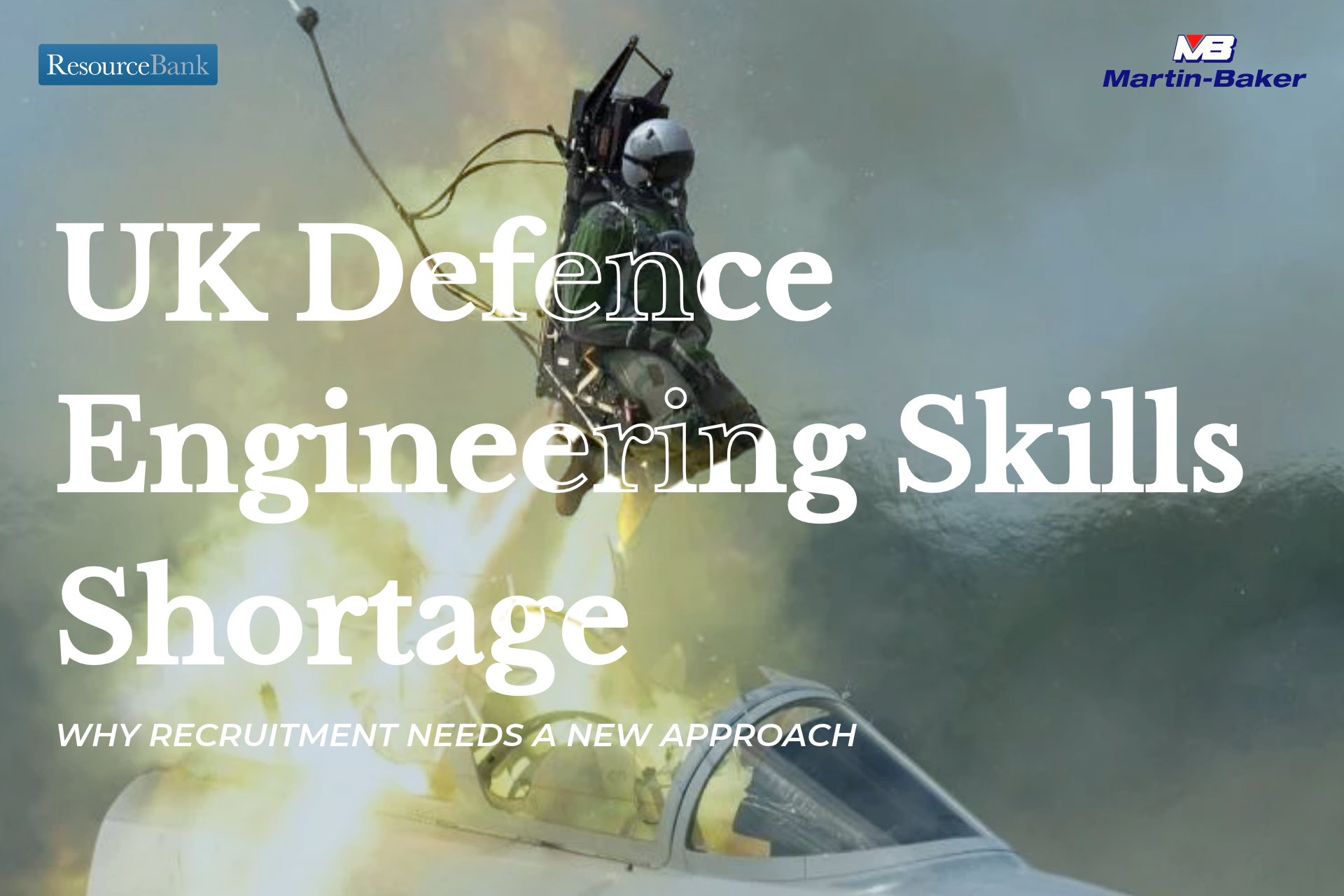
UK Defence Engineering Skills Shortage: Why Recruitment Needs a New Approach
The UK defence industry is expanding, creating significant opportunities for British engineering and manufacturing businesses. But as demand grows, so does the UK defence engineering skills shortage: finding the skilled people needed to deliver.
New research from Skills England suggests that demand for specialist defence workers could increase substantially over the next decade. For HR Directors and Talent Acquisition teams, the challenge isn’t simply filling more vacancies. It’s finding highly skilled professionals in an increasingly competitive market.
Defence Recruitment: The Scale of the Skills Challenge
According to Skills England’s October 2026 Defence Sector Skills Needs Assessment, the UK defence sector could require around 82,000 additional and replacement workers across 14 priority occupations by 2035.
Of these, approximately 53,000 represent projected employment growth, with a further 29,000 needed to replace workers leaving these occupations.
The report also highlights that:
- 87% of projected additional employment in defence priority occupations requires qualifications at Level 4 or above.
- 12 of the 14 priority occupations face demand from other sectors, increasing competition for the same skills.
- Half of these occupations are already experiencing elevated or critical demand across the wider economy.
The pressure extends beyond defence. ADS Group reports that employment across the UK’s aerospace, defence, security and space industries has grown by 39% over the past decade, reaching 468,500 jobs in 2025.
Meanwhile, Make UK’s 2026 research found that half of UK manufacturers identify skills shortages as their biggest barrier to growth.
For defence employers, the message is clear: traditional recruitment approaches will need to evolve to keep pace with demand.
Why Is the UK Defence Engineering Skills Shortage So Hard to Solve?
Highly specialised technical requirements
Defence manufacturers frequently require engineers with specific experience in mechanical design, electronics, systems engineering, manufacturing processes and quality assurance.
In safety-critical environments, employers must also consider the ability to work within rigorous engineering standards and demanding technical specifications.
Competition for the same skills
Defence employers are not only competing with one another. Automotive, aerospace, advanced manufacturing, energy and technology businesses are often seeking professionals with similar expertise.
Skills England identifies considerable overlap between defence and other priority sectors, particularly for engineering and digital roles.
Security and eligibility considerations
Depending on the role, nationality requirements, export controls and security vetting can further restrict the available candidate pool.
Recruitment teams need to understand these requirements early in the process, avoiding unnecessary delays while ensuring candidates are assessed appropriately.
An ageing workforce and future talent pipeline
Developing the next generation of engineers is essential, but apprenticeships and graduate programmes take time to deliver experienced professionals.
Employers therefore need to balance investment in early careers with strategies to attract and retain established engineering talent today.
Why Traditional Recruitment Methods Are No Longer Enough
For specialist defence engineering roles, relying solely on job advertisements can limit access to the talent employers need.
Many experienced engineers are already employed, progressing within their organisations and not actively searching job boards.
Reaching these professionals requires a more proactive approach: identifying relevant technical experience, understanding potential career motivations and building relationships before vacancies become urgent.
Recruitment teams also need the capacity to manage complex candidate searches without losing the personal engagement that makes experienced professionals interested in changing roles.
This is where the right combination of recruitment expertise and technology can make a significant difference.
How AI and Proactive Sourcing Can Help
AI-enabled recruitment technology is creating new opportunities to identify specialist engineering talent more effectively.
Intelligent skills matching can help recruiters identify candidates whose experience aligns with complex technical requirements, even when their job titles or career backgrounds differ from conventional search criteria.
It can also help recruitment teams search more widely, identify transferable skills and reduce the administrative work involved in candidate sourcing.
But AI alone cannot solve the defence skills shortage.
Experienced recruiters remain essential to understanding technical requirements, assessing suitability and engaging candidates who may need a compelling reason to consider a new opportunity.
At ResourceBank, we call this our Hi-Tech, Hi-Touch approach: combining intelligent technology with experienced recruitment professionals to deliver better hiring outcomes.
What We've Learned from Recruiting for Martin-Baker
Our recruitment partnership with Martin-Baker, the world-leading manufacturer of ejection seats and aviation safety equipment, provides a practical example of this approach.
Recruiting for Martin-Baker means identifying experienced professionals for highly technical engineering roles in a competitive market.
By combining proactive candidate sourcing, AI-enabled recruitment technology and dedicated recruitment expertise, ResourceBank has delivered measurable results:
- 45 highly technical and senior engineering vacancies filled in nine months.
- More than 350 candidates proactively sourced, rather than relying solely on applications.
- 8/10 average candidate satisfaction over a 12-month period.
Technology has played an important role in identifying suitable candidates, but the personal engagement of our recruitment team remains central to the process.
The experience demonstrates that successful defence recruitment requires more than access to candidate databases. It demands a thorough understanding of technical roles, consistent candidate engagement and a recruitment approach tailored to the organisation.
Read our Martin-Baker recruitment case study:
Building a More Resilient Defence Recruitment Strategy
The UK defence engineering skills shortage will not disappear overnight. Employers need recruitment strategies that address immediate hiring requirements while developing stronger talent pipelines for the future.
For HR and Talent Acquisition leaders, that means:
- Looking beyond active applicants: Use proactive sourcing to identify experienced professionals who may not be actively looking for work.
- Recognising transferable skills: Consider candidates from adjacent engineering and manufacturing sectors where technical experience is relevant.
- Investing in candidate relationships: Build engagement with specialist talent before vacancies become business-critical.
- Using technology intelligently: Apply AI-enabled tools to improve sourcing efficiency while retaining human judgement and candidate engagement.
- Building flexible recruitment capacity: Access specialist recruitment support when internal teams face increasing demand or particularly challenging vacancies.
The UK defence industry’s growth represents a major opportunity. But organisations that can consistently attract, engage and retain specialist engineering talent will be better positioned to deliver on that opportunity.
Could Your Defence Recruitment Strategy Be Working Harder?
ResourceBank provides sspecialist defence recruitment outsourcing and defence RPO solutions, combining experienced recruiters, intelligent technology and proven engineering recruitment expertise.
Whether you’re struggling to recruit specialist engineers, planning an increase in hiring or looking to strengthen your recruitment processes, we’d welcome a conversation.
Explore ResourceBank’s Defence Recruitment Outsourcing Solutions: here
Explore ResourceBank’s Defence Recruitment Outsourcing Solutions:
HR Director or Talent Acquisition lead?
Our defence recruitment specialists can talk you through how we sourced and approached 385 engineers for Martin-Baker in 12 months. Book a conversation today.
Sources
- Skills England – Defence Sector Skills Needs Assessment (2026): https://www.gov.uk/government/publications/skills-england-annual-skills-report-and-sectoral-skills-needs-assessments-2026/sector-skills-needs-assessment-defence
- ADS Group – Industry Facts & Figures 2026: https://www.adsgroup.org.uk/facts2026/
- Make UK – The Shape of British Industry (2026): https://www.makeuk.org/insights/reports/shape-british-industry