Early careers recruitment has always been high-volume — but in today’s market, it’s becoming increasingly complex.
As organisations look to manage growing application volumes and rising candidate expectations, AI in early careers recruitment is becoming a key focus.
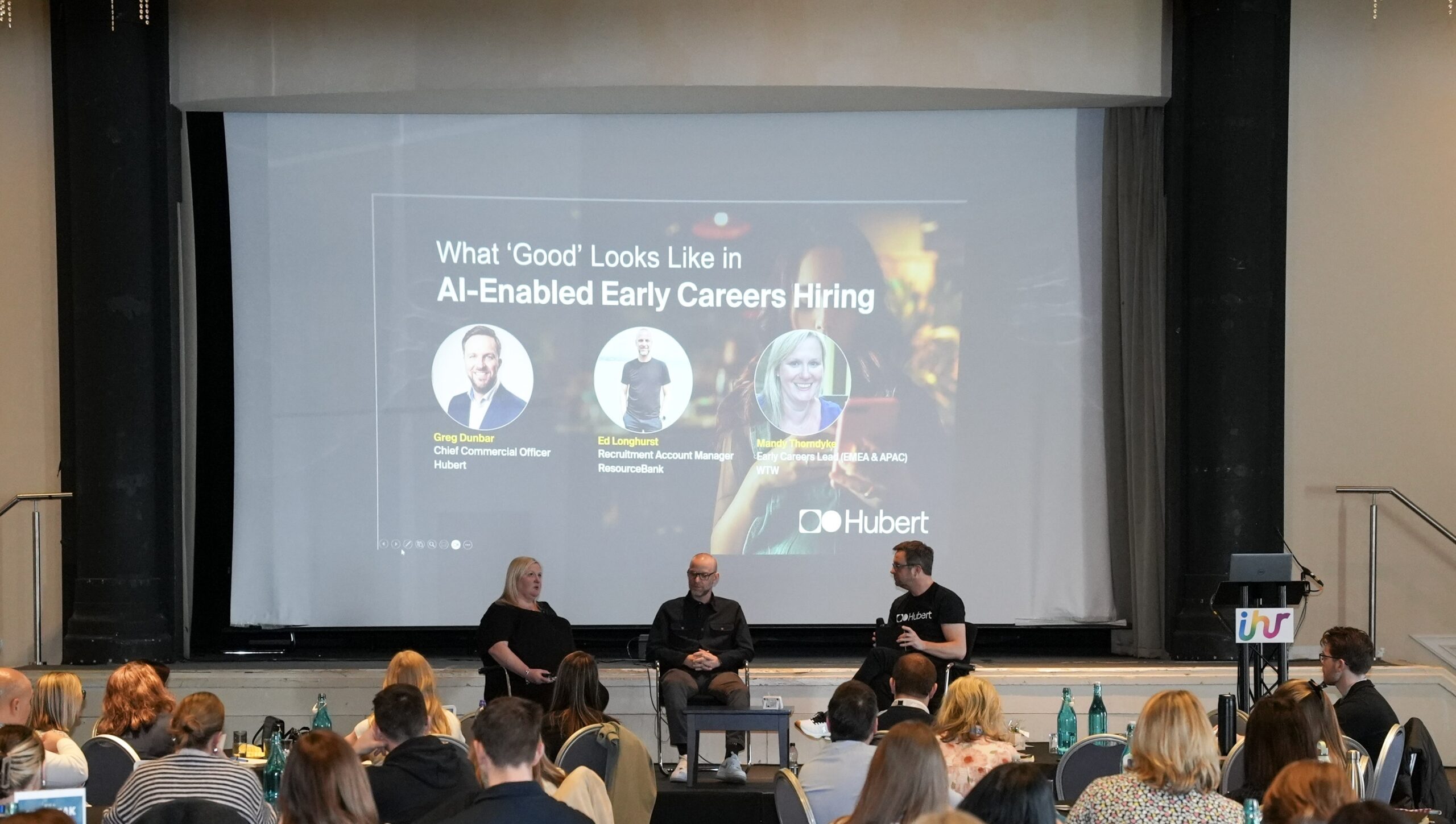
At a recent Early Careers event hosted by the In-house Recruitment Network in partnership with Hubert, this challenge was front and centre.
Speaking on the panel, Ed Longhurst shared insight into how organisations like Daikin are responding — balancing increased demand with the need to deliver a fast, fair, and engaging candidate experience.
Why AI in Early Careers Recruitment is Growing
For many employers, attracting early careers talent is no longer the issue.
Managing it is.
Early careers recruitment now involves:
- Thousands of applications for apprenticeship and graduate roles
- Time-intensive screening processes
- Pressure to respond quickly and consistently
- Rising expectations around fairness and communication
As highlighted during the panel discussion, traditional recruitment approaches are struggling to keep pace with this level of demand.
This is where AI in early careers recruitment is starting to play a critical role — helping organisations manage volume without compromising quality
From Insight to Action: Rethinking the Process
A key takeaway from the event was that technology alone isn’t the starting point.
Before introducing AI, organisations need to:
- Understand their recruitment process end-to-end
- Identify bottlenecks (particularly in screening and communication)
- Define where technology can add the most value
At ResourceBank, this structured approach has been key in supporting clients like Daikin to evolve their early careers recruitment strategy.
Applying AI in Early Careers Recruitment
here isn’t a single solution when it comes to AI for early careers recruitment.
Instead, the most effective strategies use a combination of technologies — each supporting a different stage of the hiring journey.
For example:
- Structured candidate management and communication
→ Platforms like Avature enable consistent, scalable recruitment processes - AI-supported screening and prioritisation
→ Tools such as Hubert help review high volumes of applications quickly and fairly - Interview insight and continuous improvement
→ Solutions like Metaview provide visibility into interview performance and decision-making
This combination allows organisations to build a recruitment process that is both efficient and controlled.
What This Looks Like in Practice
For organisations like Daikin, applying AI in early careers recruitment has helped to:
- Improve speed of response to candidates
- Deliver more consistent and objective screening decisions
- Provide better visibility across the recruitment process
- Reduce the administrative burden on recruitment teams
This ensures that even as application volumes increase, the candidate experience remains a priority — something strongly emphasised during the panel hosted by Hubert.
What This Means for Employers
If your organisation is experiencing:
- Increasing application volumes
- Pressure on screening and response times
- Challenges maintaining candidate experience
Then AI in early careers recruitment should be part of your strategy.
However, success doesn’t come from adopting tools in isolation.
It comes from:
- Designing the right process
- Applying technology where it adds value
- Maintaining strong human engagement throughout
Looking Ahead
The role of AI in early careers recruitment will continue to grow as organisations look to manage volume more effectively.
But the organisations that succeed will be those that focus not just on efficiency —
but on delivering a recruitment experience that is fair, consistent and engaging at scale.
If you’re exploring how AI in early careers recruitment could support your hiring strategy, we’ll be sharing practical insights in our upcoming webinar in May, where we’ll explore how these technologies work together in practice — and how to apply them effectively within your own recruitment strategy.
👉 More details coming soon.