Another urgent hiring push? How to tell when it's become a pattern
Urgent hiring happens to every business. A new site opens, a contract is won, a busy season arrives early. Project RPO is built for exactly that, and it works: ResourceBank helped SSP UK & Ireland go from around 400 live vacancies to over 250 offers and 200 starts in under three months.
But when urgent pushes start to repeat, it’s worth asking whether it’s the pace or the plan that needs attention. This applies whether you’ve used RPO before or you’ve covered each push with agencies and extra effort from your own team.
When a one-off really is a one-off
Short-term support is the right call when the need has a clear edge: a single high-volume surge, a seasonal peak, a new site opening, a deadline to hire against. Once it’s delivered, the need genuinely ends and your internal team picks the baton back up. Plenty of businesses use Project RPO exactly like this, once, successfully.
Signs your urgent hiring has become a pattern
It’s less a checklist and more a prompt to look honestly at your last year or two of hiring:
- You’ve run more than one “urgent” hiring push, and each has felt like starting from scratch
- Your hiring has a seasonal or repeating shape rather than being a true one-off
- You rebuild processes, employer brand messaging and candidate pipelines each time instead of building on what worked
- Your internal team spends more time reacting to recruitment than planning it
- The business has grown but your recruitment capacity hasn’t
- Agencies are filling a growing share of your hires
- New hire turnover is creeping up, which can be a sign that process, not just volume, needs attention
None of this means the first push was the wrong call. It means your needs have changed shape, and it’s worth checking your recruitment model has kept pace.
Speed done well, and what a year of support looks like
SSP: a surge, delivered fast.
In early 2022 SSP needed 2,000 to 3,000 hires in time for Easter, with live vacancies climbing from around 400 to 700-800.
ResourceBank mobilised in under four weeks and delivered over 250 offers and 200 starts in under three months, using live trackers, multi-channel advertising and smart reporting to keep a high-volume, multi-site campaign visible from day one. That’s what a defined, urgent need looks like when it’s handled well.
Martin-Baker: a year of continuing support.
Over twelve months of working together, ResourceBank’s support for Martin-Baker’s specialist skill engineering hiring has resulted in 59 offers made, 53 accepted and 39 candidates fully onboarded. Over the year, the share of hiring manager interviews converting to offers rose from 28% to 40%, and shortlisted candidates invited to interview rose from 62% to 71%. Candidates rated their experience 9.8 out of 10 across 374 reviews.
The point isn’t that one example is better than the other. SSP needed a sprint. Martin-Baker benefits from ongoing support. Different needs, both RPO.
Options when urgent hiring keeps coming back
A surge doesn’t have to mean a permanent increase in headcount, and it doesn’t have to mean starting over each time. Depending on your pattern, there are a few routes:
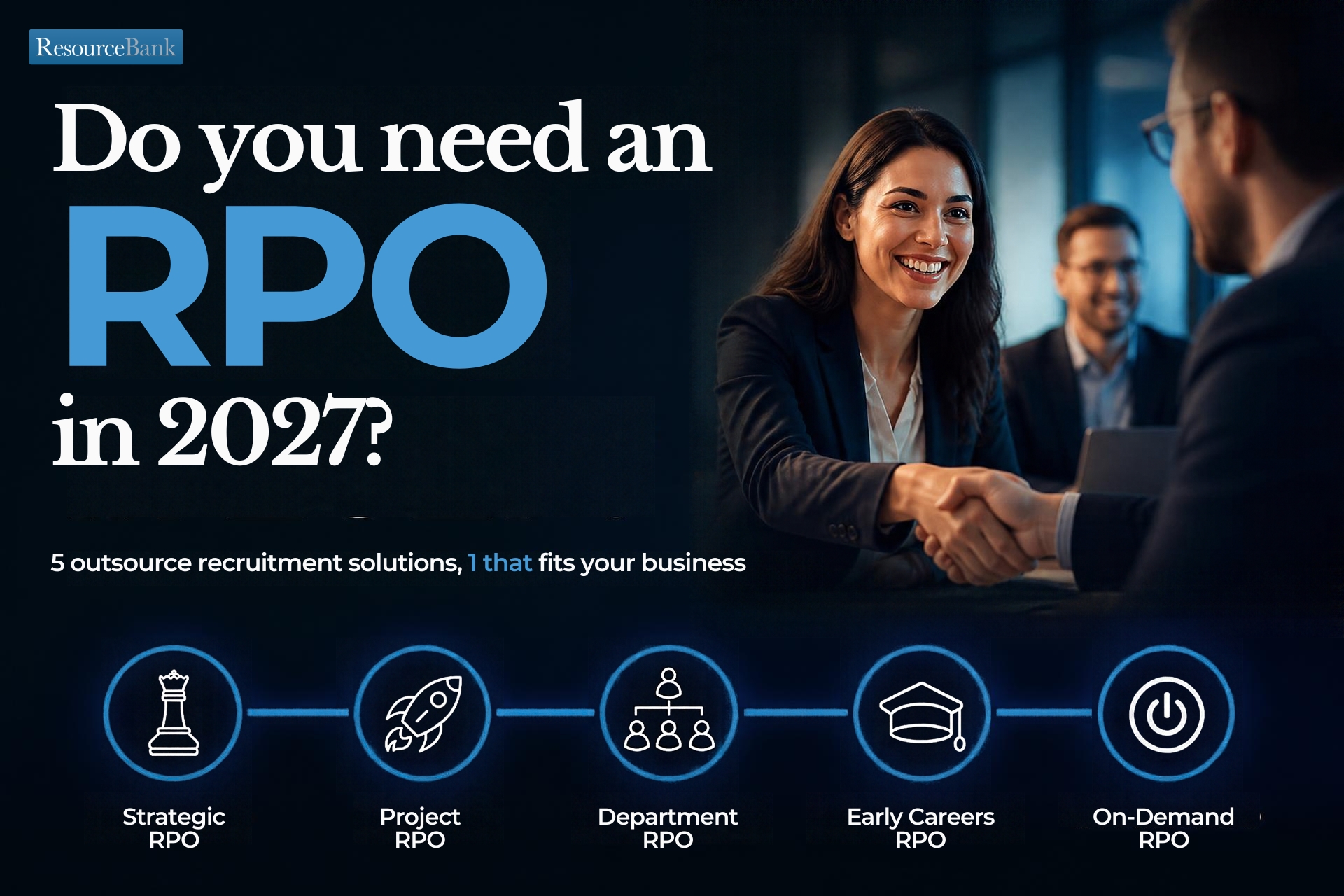
- On-Demand RPO: retained support you turn on when volumes spike and off when they don’t
- Department RPO: hand over recruitment for the one area under the most pressure
- Strategic RPO: an embedded, long-term partnership that takes on recruitment as an ongoing function, like World Duty Free’s 19 years with ResourceBank
You don’t have to jump straight to the biggest option. Many businesses start with one department or on-demand support and build from there.
Match the model to your pattern
It’s about fitting the support to where your business is now, not where it was when you first called in help.
Not sure whether your urgent hiring is a one-off or a pattern? Let’s chat and we’ll talk it through honestly, including if the answer is “you don’t need us yet.”