
New government research highlights the scale of the workforce challenge facing adult social care. With demand growing and recruitment pressures continuing, care providers need to rethink how they attract, recruit and retain their people.
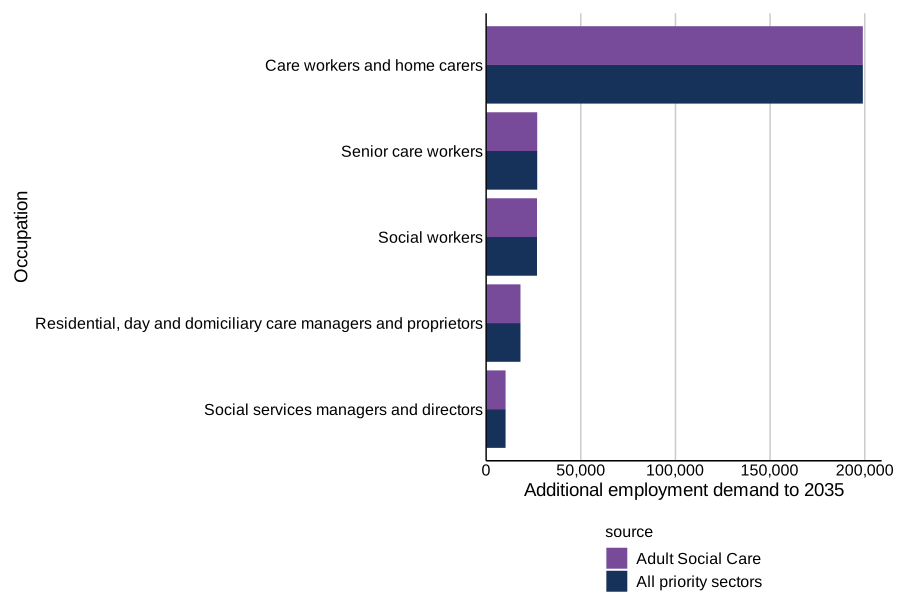
According to the latest Skills England Sector Skills Needs Assessment, published in October 2026, the sector will need approximately 685,000 workers by 2035 across five priority occupations, including care workers, senior care workers and social care managers.
This includes 281,000 additional workers to meet growing demand, alongside an estimated 404,000 workers needed to replace those leaving these occupations.
For care providers already managing persistent vacancies, high staff turnover and tight budgets, the findings raise a question: how can the sector recruit enough people without simply increasing recruitment costs?
Social care recruitment challenges: the scale of the problem
The latest workforce figures illustrate the pressure facing employers.
Skills for Care reported approximately 96,000 vacant posts across England’s adult social care sector in 2025/26. Although the vacancy rate has fallen to 6.2%, its lowest level in a decade, it remains around three times higher than the wider economy.
Meanwhile, Skills England forecasts a 28% increase in employment demand across five priority social care occupations between 2025 and 2035.
Care workers and home carers alone account for approximately 199,000 of the additional workers required.
These figures highlight an important distinction. The challenge isn’t simply replacing employees who leave. It’s recruiting enough additional people to support an expanding sector while maintaining a stable, experienced workforce.
For organisations operating across multiple locations, this creates significant challenges for recruitment teams, operational managers and HR leaders.
Why traditional recruitment approaches may no longer be enough
Care providers have long faced competition for candidates, particularly in locations where other employers can offer more attractive pay or working patterns.
However, increasing recruitment demand creates several additional pressures.
High recruitment volumes: Managing hundreds or thousands of applications can overwhelm internal recruitment teams, delaying shortlisting, interviews and offers.
Competition for talent: Care providers are competing not only with other care organisations but also with employers in retail, hospitality, logistics and the wider healthcare sector.
Staff turnover: Recruiting new employees is only part of the solution. Understanding why people leave and improving retention are equally important.
Agency dependency: When permanent vacancies remain unfilled, providers may become increasingly reliant on costly temporary staffing arrangements.
Candidate experience: Lengthy application processes, inconsistent communication and delays between interview and offer can mean losing suitable candidates.
The result is a recruitment cycle that can be expensive, time-consuming and difficult to sustain.
Simply spending more on job advertising is unlikely to solve these underlying challenges.
Five priorities for a more sustainable care recruitment strategy
1. Build stronger direct recruitment pipelines
Reducing reliance on temporary agency workers starts with improving the effectiveness of permanent recruitment.
Care providers need consistent candidate attraction, efficient screening and closer relationships between recruitment teams and hiring managers.
An embedded recruitment outsourcing model can provide additional capacity and specialist expertise, helping organisations manage large recruitment volumes while maintaining control over the candidate experience.
2. Use technology to accelerate recruitment, not replace people
Artificial intelligence and recruitment automation offer significant opportunities to improve efficiency.
AI-enabled screening tools can help recruitment teams manage large application volumes, identify relevant experience and reduce repetitive administration.
But in social care, recruitment cannot simply become an automated process.
Compassion, communication, reliability and values are fundamental to delivering quality care. Technology should support recruiters in making better decisions, while human judgement remains central to assessing suitability.
At ResourceBank, we call this our Hi-Tech, Hi-Touch approach: combining intelligent technology with experienced recruitment professionals.
3. Make employer branding a recruitment priority
With growing competition for candidates, care providers need to communicate why someone should choose to work for their organisation.
A compelling employer brand goes beyond pay and benefits. It communicates purpose, culture, career development and the difference employees can make.
ResourceBank’s employer branding work with Mountbatten Hospice demonstrates how organisations can communicate the rewards of working in care and strengthen their appeal to prospective employees.
Read the Mountbatten Hospice employer branding case study.
4. Understand why employees leave
Recruitment and retention should not be treated as separate challenges.
If organisations continue to lose experienced employees, even the most effective recruitment process will struggle to keep pace.
Independent exit interviews and employee feedback can provide valuable insight into the reasons people leave, helping employers identify opportunities to improve working conditions, management practices and employee engagement.
ResourceBank’s work with Affinity Trust, for example, increased exit interview completion from approximately 10% to 61%, providing a stronger evidence base for workforce decisions.
Read the Affinity Trust exit interview case study.
5. Make recruitment a strategic partnership
For larger care providers, recruitment needs to be closely aligned with operational priorities.
This means understanding where vacancies are creating the greatest pressure, anticipating future workforce requirements and using recruitment data to make better decisions.
Rather than relying on reactive recruitment campaigns, organisations can benefit from a more coordinated approach that brings together recruitment expertise, technology, workforce planning and candidate attraction.
Leonard Cheshire: Putting a different approach into practice
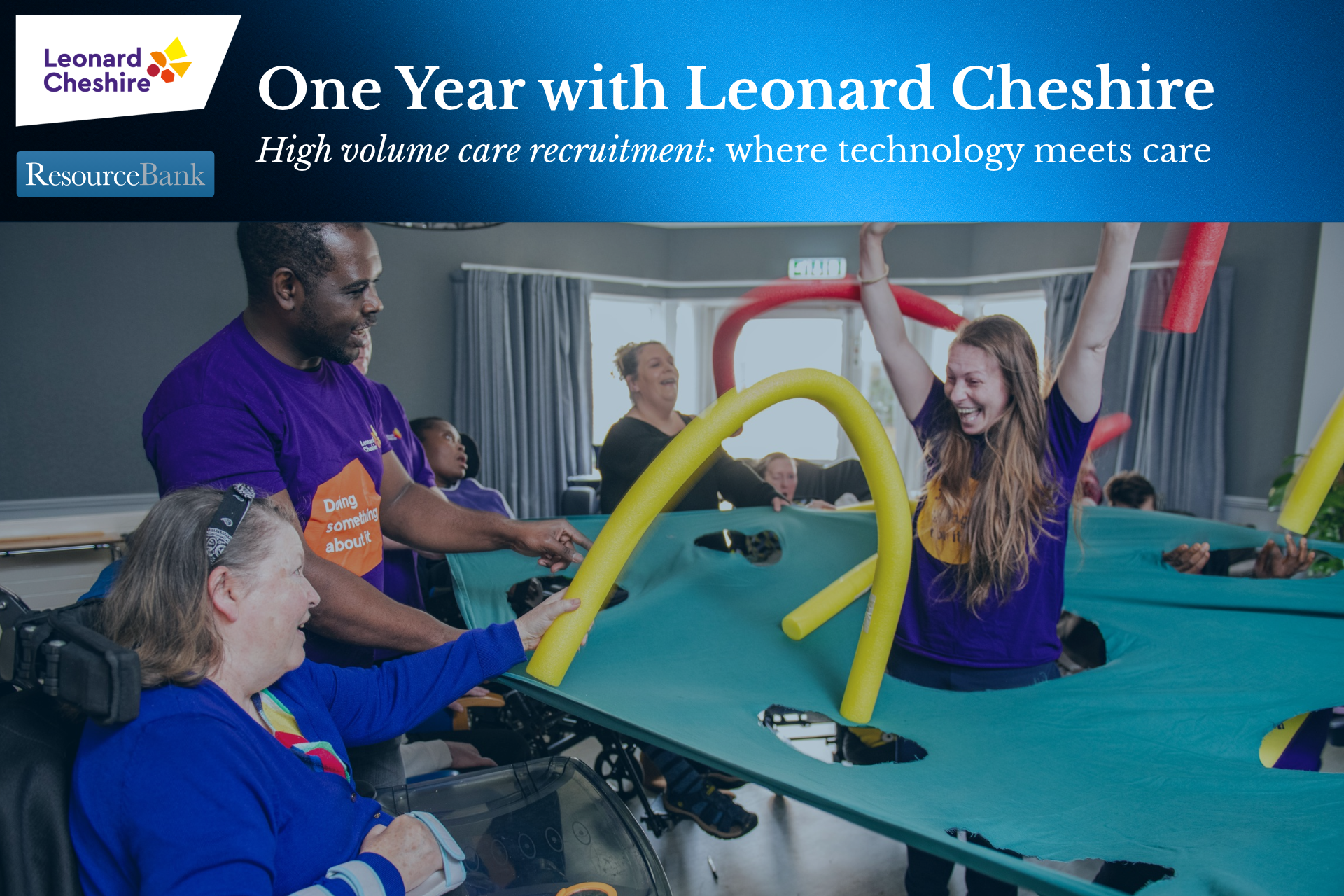
ResourceBank’s ongoing partnership with Leonard Cheshire provides a practical example of how recruitment outsourcing can help a national care organisation tackle high-volume hiring challenges.
Since launching in November 2025, the partnership has combined a dedicated recruitment team with AI-enabled screening, targeted candidate attraction and hands-on support for hiring managers.
In the first year, the team managed more than 39,000 applications, while performance data from January to September 2026 showed:
- A 54% interview-to-offer rate
- A 37% reduction in application-to-shortlist time
The partnership has also focused on improving the candidate journey and reducing reliance on temporary agency staffing.
The experience demonstrates how combining technology with specialist recruitment expertise can help care providers improve recruitment efficiency without losing the personal approach essential to the sector.
Read more about ResourceBank’s partnership with Leonard Cheshire.
Read the Leonard Cheshire recruitment outsourcing case study.

Preparing for the next decade of care recruitment
The Skills England forecasts should be a wake-up call for the sector.
Finding hundreds of thousands of workers over the next decade will require more than additional job advertising or larger recruitment teams.
Care providers will need to attract people who may never previously have considered a career in care, improve the experience of existing employees and make recruitment processes more effective.
There is no single solution to the sector’s workforce challenges. Funding, pay, career progression and working conditions will all influence whether the required workforce can be attracted and retained.
However, recruitment strategy is one area where employers can take practical action now.
By investing in stronger employer brands, more efficient recruitment processes, better workforce insight and the right technology, care organisations can put themselves in a stronger position to meet future demand.
The challenge isn’t simply recruiting more people. It’s creating a recruitment model capable of delivering the right people, consistently and sustainably.
How ResourceBank can help
ResourceBank works with health and social care organisations to improve recruitment performance, reduce recruitment pressures and build stronger workforces.
Our flexible services include recruitment process outsourcing (RPO), high-volume recruitment, employer branding, AI-enabled recruitment solutions and independent exit interviews.
Whether you’re managing recruitment across multiple care locations or looking to improve a specific part of your recruitment process, our team can help you find a more effective approach.
Let's build a stronger care workforce together
Whether you’re struggling with persistent vacancies, rising agency costs or employee turnover, ResourceBank can help you find a better way to recruit.
Let’s discuss your workforce challenges and explore how our health and social care recruitment outsourcing solutions could make a difference.
Sources
- Skills England: Sector Skills Needs Assessment: Health and Adult Social Care, October 2026
- Skills for Care: The State of the Adult Social Care Sector and Workforce in England
- ResourceBank: High-Volume Care Recruitment: Leonard Cheshire
- Skills for Care: Size and Structure of the Adult Social Care Sector and Workforce in England, 2025/26